In the glittering world of casino gaming, few disputes are as enduring as the comparison between Pontoon and Blackjack. To the casual observer walking through the halls of a casino in London or peering at the digital interface of an online platform, these two games may appear identical. Both involve a dealer, a deck of cards, and the frantic pursuit of the number twenty-one. However, peering beneath the surface reveals a layered set of historical differences, strategic nuances, and mathematical variations that define these two titans of the green felt. Whether you are a seasoned card counter or a weekend enthusiast, understanding the interplay between these two variations is essential for maximizing both your enjoyment and your potential returns at the table.
Blackjack is undoubtedly the more famous sibling, serving as the cornerstone of the American gambling experience and a staple in pop culture. From the high-stakes rooms of Las Vegas to the smoky backrooms of cinematic history, Blackjack represents the quintessential battle of wits against the house. Conversely, Pontoon is often referred to as the British cousin of Blackjack, though it has evolved into two distinct versions: the traditional British game and the Australian "Spanish 21" variant often found in modern casinos. While they share a common ancestor in the French game Vingt-et-Un, they have diverged significantly over the centuries. This article aims to dismantle the myths surrounding these games and provide a definitive analysis of how they differ in rules, payouts, and player strategy.
The Historical Origins of the 21 Family
To truly appreciate the nuances of Pontoon vs. Blackjack, one must first look at the genealogical tree of card games. Most historians agree that the concept of "21" originated in Spain and France during the 17th century. Miguel de Cervantes, the author of Don Quixote, wrote about a game called ventiuna as early as 1601. In France, Vingt-et-Un became a favorite of the aristocracy and eventually Napoleon Bonaparte himself. When these games traveled across the Atlantic to the United States, gambling halls began offering special payouts to attract players, including a 10-to-1 bonus for a hand consisting of the Ace of Spades and a "black" Jack (Spades or Clubs). Though the bonus was eventually phased out, the name "Blackjack" stuck permanently to the American version.
Across the pond, the British developed their own version of the game which they playfully dubbed "Pontoon." The word itself is believed to be a corruption of the French "Vingt-et-Un," adapted through the thick accents of British soldiers during World War I. While Blackjack became standardized and regulated through the influence of Nevada gaming laws in the mid-20th century, Pontoon remained largely a domestic and private game for much of its history. This led to a more fluid ruleset that prioritizes player flexibility and introduces unique hand rankings not found in the American counterpart. Today, when you sit down at a "Pontoon" table in a modern casino, you are often playing a hybridized version that blends these traditional British elements with modern house advantages.
The divergence between the two games reflects the different gambling cultures of the UK and the US. American Blackjack is built on transparency and rigid mathematical structure, where every card reveal is a calculated event. British Pontoon, by contrast, evolved with a sense of "hidden" information and aggressive doubling opportunities, creating a game that feels faster and more volatile. Understanding these historical roots is not just academic; it explains why certain rules, like the dealer’s hole card or the "Five Card Trick," exist in one game but are completely absent in the other.
Core Rules and Objective Differences
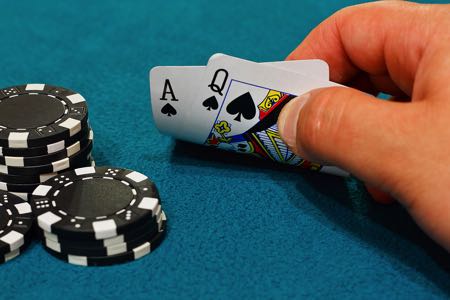
The fundamental objective in both games is to beat the dealer by achieving a hand total as close to 21 as possible without exceeding it. However, the terminology and the value of specific hands create a distinct atmosphere for each. In Blackjack, the best possible hand is called a "Natural" or simply a "Blackjack," consisting of an Ace and any ten-valued card. In Pontoon, this same combination is known as a "Pontoon." While this might seem like a mere semantic difference, the ranking of hands in Pontoon is more complex. While Blackjack only has one "ultimate" hand, Pontoon introduces the "Five Card Trick," which is the second-best hand a player can hold.
The "Five Card Trick" (also known as a "Charlie" in some Blackjack variations, though rarely as a standard rule) occurs when a player manages to collect five cards in their hand without busting. In Pontoon, this hand is superior to any three or four-card hand totaling 21. This single rule dramatically alters how a player approaches their turn. In Blackjack, if you have 14 and draw three small cards, you simply have a 21. In Pontoon, that same sequence elevates your hand to a status that can only be beaten by a "Pontoon." This creates a tactical layer where players may choose to "twist" (hit) on totals they would normally stay on in Blackjack, simply to chase the prestige of the five-card hand.
Furthermore, the dealer’s role in these games is handled with varying levels of transparency. In American Blackjack, the dealer receives one card face up and one card face down (the hole card). The dealer checks for Blackjack immediately if their up-card is an Ace or a ten. In Pontoon, both of the dealer’s cards remain face down until the very end of the hand. This "blind" play removes a massive amount of information from the player’s hands. In Blackjack, seeing the dealer’s 6 allows you to play conservatively; in Pontoon, you are essentially flying blind, which is why the game provides more aggressive betting options to compensate for this lack of information.
Betting and Terminology: Hits, Twists, and Stickers
One of the most immediate hurdles for a Blackjack player moving to a Pontoon table is the language. Language in gambling isn't just about flavor; it dictates the flow of the game. In Blackjack, the standard commands are "Hit," "Stand," "Double Down," and "Split." In British Pontoon, these are replaced with "Twist," "Stick," "Buy," and "Split." While "Twist" and "Hit" serve the same purpose—requesting another card—the nuances of "Buying" vs. "Doubling Down" are where the mathematical strategies begin to diverge.
In standard Blackjack, you can usually only double down on your first two cards, and doing so limits you to receiving exactly one more card. Pontoon is much more generous. A player can "Buy" a card on any hand between two and four cards. Furthermore, after you "Buy" (increase your bet) and receive a card, you can continue to "Twist" (receive cards without increasing the bet) or even "Buy" again. This allow players to build massive bets on hands that are evolving favorably. This flexibility is a double-edged sword; while it allows for greater wins on a Five Card Trick, it also tempts players into over-extending their bankroll against a dealer whose hand is still hidden.
The rules for "Standing" or "Sticking" also differ. In most Blackjack games, a player can stand on any total, even a hand as low as 12. In Pontoon, there is often a "minimum sticking point." Players are typically required to continue twisting until they reach at least 15. This rule prevents players from being overly timid but also increases the house edge by forcing players into "bust" territory. This mandatory aggression is a hallmark of Pontoon and requires a shift in mindset for those used to the "stay on 12 against a dealer 6" mentality of Blackjack.
The Dealer Advantage and "Ties Lose"
The most significant and perhaps most frustrating difference for Blackjack veterans is how ties (pushes) are handled. In standard Blackjack, if both the player and the dealer finish with the same total, it is a "push"—neither wins, and the player’s stake is returned. This is a fundamental pillar of Blackjack’s relatively low house edge. Pontoon, however, operates under the harsh rule that "the dealer wins all ties." If the dealer and the player both have a Pontoon, the dealer wins. If they both have 20, the dealer wins.
To the uninitiated, this seems like an insurmountable disadvantage. If the dealer wins every tie, why would anyone play? The answer lies in the compensatory rules that favor the player. To balance the "ties lose" rule, Pontoon offers higher payouts for the best hands. While a standard Blackjack pays 3:2 (or the increasingly common but less favorable 6:5), a Pontoon typically pays 2:1. Similarly, a Five Card Trick also pays 2:1. These doubled payouts for the top two hand rankings are the engine that keeps the game competitive.
Additionally, the dealer’s behavior in Pontoon is more restricted yet more dangerous. Because the dealer’s cards are face down, the house usually allows players to act first entirely. Once all players have completed their turns, the dealer reveals their cards. If the dealer reaches a Five Card Trick or a 21, they immediately sweep the table. The "ties lose" rule essentially means the dealer doesn't have to "beat" you; they only have to "match" you. This makes the endgame of a Pontoon round feel much higher-stakes, as your 21 is never truly "safe" until the dealer has finished their draw.
The Role of the Dealer’s Hole Card
In Blackjack, the "Peeking" rule is a vital component. When a dealer shows an Ace, they check for Blackjack before the players move. This saves players from doubling down or splitting against an unbeatable hand. In Pontoon, because the dealer’s cards are hidden, "No Hole Card" rules usually apply. This means players can build huge "Buy" bets and split their hands multiple times, only to find out the dealer had a Pontoon all along. This lack of a "peek" increases the volatility of the game significantly.
Strategic Adjustments for Pushing
Because you lose on a tie, the "Basic Strategy" charts for Pontoon look very different from Blackjack. You cannot afford to be passive. In Blackjack, the goal is often to let the dealer bust. In Pontoon, your goal is to actively build a hand that is likely to be better than the dealer’s, because "same" isn't good enough. This leads to more frequent "Buying" and a much higher frequency of hitting on 16, a total that many Blackjack players view as a "death hand."
Split Rules and Hand Development
Splitting pairs is a core mechanic in both games, but the execution differs. In Blackjack, when you split a pair of Aces, you are almost always restricted to receiving just one card on each Ace. If you draw a ten-valued card, it counts as a 21, not a "Natural Blackjack," meaning you don't get the 3:2 bonus. Pontoon is often much more lenient with splits. In many versions of Pontoon, if you split Aces and draw a ten, it still counts as a "Pontoon," yielding that sweet 2:1 payout.
Furthermore, Pontoon allows for more creative hand development after a split. Players can usually split any two cards of equal value (sometimes even any two ten-valued cards, like a King and a Queen) up to three times, creating four separate hands. Because you can "Buy" on these split hands, the potential to turn a single pair of 8s into a massive windfall is much higher in Pontoon than in Blackjack. The ability to continue "Twisting" on split Aces until you are satisfied—rather than being stuck with whatever single card you're dealt—is a massive strategic advantage for the player.
However, the "dealer wins ties" rule looms over every split hand. If you split your Kings and end up with two hands of 20, and the dealer also hits 20, you lose both bets. In Blackjack, you would have protected your bankroll with a push. This makes splitting in Pontoon a more aggressive, offensive move rather than a defensive one. You aren't just trying to maximize a good starting hand; you are trying to reach that 21 or Five Card Trick threshold where you are finally safe from the dealer’s tie-breaking power.
Determining the House Edge and Payouts
When choosing between these two games, the "math of the game" is ultimately what should guide a player’s decision. Blackjack is widely considered to have one of the lowest house edges in the casino, often hovering around 0.5% when played with perfect basic strategy. The standard 3:2 payout for a Blackjack is the player’s greatest weapon. When casinos move to a 6:5 payout, the house edge jumps significantly, making the game much harder to beat over the long term.
Pontoon’s house edge is more difficult to pin down because it depends heavily on the specific "Five Card Trick" payouts and whether the game uses a standard 52-card deck or a "Spanish" deck (which removes the 10s). In its truest British form, the house edge for Pontoon can actually be lower than Blackjack, sometimes sitting around 0.38%. This is entirely due to the 2:1 payouts for Pontoons and Five Card Tricks. While losing ties is a heavy penalty, being paid double for your best hands is a massive boon that compensates for the statistical loss of the push.
It is important to distinguish between "British Pontoon" and "Spanish 21" (which is sold as Pontoon in Australia and Malaysia). Spanish 21 removes all the 10s from the deck (leaving the Jacks, Queens, and Kings). A deck without 10s is disastrous for the player, so the game adds a litany of "bonus" rules to make up for it, such as "Player 21 always wins" (negating the dealer’s tie advantage). When comparing the two, traditional Blackjack is generally more stable and less prone to wild swings, whereas Pontoon offers higher "peaks" during a winning streak due to the 2:1 payouts.
Strategic Depth: How to Win at Pontoon
If you are transitioning from Blackjack to Pontoon, your strategy must evolve. The first change is realizing that the "Five Card Trick" is a legitimate goal. In Blackjack, you almost never want to have five cards; it usually means you’ve had five opportunities to bust. In Pontoon, if you have a low total like 14 with three cards, you should almost always "Twist" or "Buy." The chance of hitting two more small cards to secure a Five Card Trick is a viable path to a 2:1 win that doesn't exist in Blackjack.
Secondly, the "Buy" mechanic must be used judiciously. In Blackjack, you double down based on the dealer’s visible weakness (like a 5 or 6). In Pontoon, you Buy based on your own hand's strength and the potential for a Five Card Trick. Because the dealer’s cards are hidden, you are playing a "hand vs. range" game. You must assume the dealer has a 15-18 and play your hand to beat that range. This means being much more aggressive with "Buying" on totals of 10 or 11, regardless of what you think the dealer has.
Finally, the "Must Hit" rule on 14 or less means you need to be comfortable with busting. You will bust more often in Pontoon than in Blackjack. However, because you are aiming for those 2:1 payouts, one "Pontoon" win covers two standard losses. This changes the money management aspect of the game. A Blackjack player might aim for slow, steady growth, while a Pontoon player is often looking for that one "monster" hand where they Buy multiple times, hit a Five Card Trick, and take a large chunk of change from the house in a single round.
Which Game is Right for You?
The choice between Pontoon and Blackjack often comes down to personal temperament and what you seek in a gambling experience. Blackjack is the game of the "Grinder." It is for the player who enjoys the slow, methodical application of math, the predictability of the rules, and the comfort of knowing that a tie results in a safe return of capital. It is a game of transparency where the dealer’s up-card provides a puzzle to be solved. If you value low volatility and a wealth of available study material, Blackjack is the gold standard.
Pontoon, on the other hand, is the game of the "Gambler." It is faster, more aggressive, and offers higher rewards for high-risk play. The hidden dealer cards create an atmosphere of mystery and suspense that Blackjack lacks. The "Five Card Trick" adds a layer of "chasing the draw" similar to poker, where you are looking for specific cards to complete a powerful hand. If you find Blackjack a bit too repetitive or "solved," the complex betting structures and superior payouts of Pontoon offer a refreshing and potentially more lucrative alternative.
Ultimately, both games are masterpieces of casino design. They take a simple concept—summing numbers to 21—and turn it into a deep strategic battle. Whether you prefer the "Stick and Twist" of a London club or the "Hit and Stand" of the Vegas Strip, the key to success remains the same: understand the rules, respect the house edge, and never chase your losses. By mastering the differences outlined in this guide, you can walk up to either table with the confidence of a pro, knowing exactly when to stay, when to buy, and when to walk away.
Want to try Pontoon or blackjack variants? Read our Roobet review and see our full 7Bit Casino review.
Further Reading
If you are choosing where to play next, start with our hand-tested curacao licensed online casinos list and our guide to the best Curacao casino bonuses currently available to UK players. For brands that sit outside the UK self-exclusion scheme, see our breakdown of Curacao casinos for UK players.
For background on how the licence works and the consumer-protection trade-offs involved, read our Curacao gaming license guide and the honest are Curacao casinos safe? analysis. If payout speed matters most to you, the withdrawal times by payment method guide is the fastest way to identify the quickest brands.
Whichever variant you settle on, the leak is rarely the rules themselves — it is the player. Our breakdown of the worst blackjack mistakes beginners make covers the procedural errors that cost more than any rule difference between Pontoon and standard blackjack.